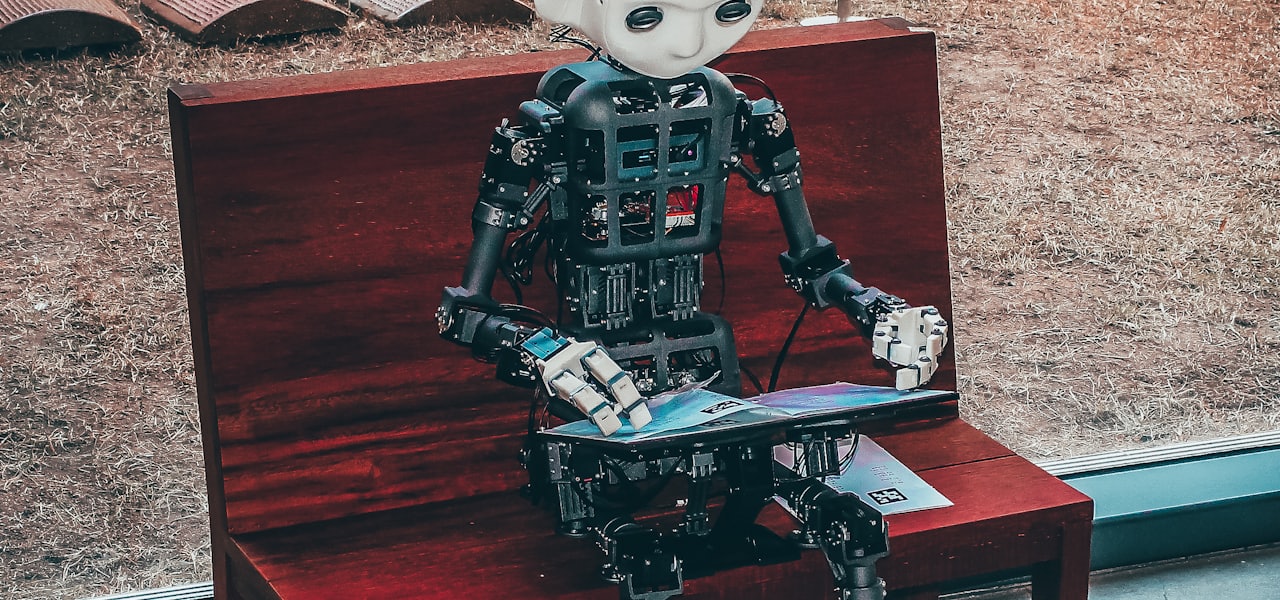
Social profiling is the process of constructing a social media user's profile using their social data. In general, profiling refers to the data science process of generating a person's profile with computerized algorithms and technology. There are various platforms for sharing this information with the proliferation of growing popular social networks, including but not limited to LinkedIn, Google+, Facebook and Twitter. == Social profile and social data == A person's social data refers to the personal data that they generate either online or offline (for more information, see social data revolution). A large amount of these data, including one's language, location and interest, is shared through social media and social network. Users join multiple social media platforms and their profiles across these platforms can be linked using different methods to obtain their interests, locations, content, and friend list. Altogether, this information can be used to construct a person's social profile. Meeting the user's satisfaction level for information collection is becoming more challenging. This is because of too much "noise" generated, which affects the process of information collection due to explosively increasing online data. Social profiling is an emerging approach to overcome the challenges faced in meeting user's demands by introducing the concept of personalized search while keeping in consideration user profiles generated using social network data. A study reviews and classifies research inferring users social profile attributes from social media data as individual and group profiling. The existing techniques along with utilized data sources, the limitations, and challenges were highlighted. The prominent approaches adopted include machine learning, ontology, and fuzzy logic. Social media data from Twitter and Facebook have been used by most of the studies to infer the social attributes of users. The literature showed that user social attributes, including age, gender, home location, wellness, emotion, opinion, relation, influence are still need to be explored. === Personalized meta-search engines === The ever-increasing online content has resulted in the lack of proficiency of centralized search engine's results. It can no longer satisfy user's demand for information. A possible solution that would increase coverage of search results would be meta-search engines, an approach that collects information from numerous centralized search engines. A new problem thus emerges, that is too much data and too much noise is generated in the collection process. Therefore, a new technique called personalized meta-search engines was developed. It makes use of a user's profile (largely social profile) to filter the search results. A user's profile can be a combination of a number of things, including but not limited to, "a user's manual selected interests, user's search history", and personal social network data. == Social media profiling == According to Samuel D. Warren II and Louis Brandeis (1890), disclosure of private information and the misuse of it can hurt people's feelings and cause considerable damage in people's lives. Social networks provide people access to intimate online interactions; therefore, information access control, information transactions, privacy issues, connections and relationships on social media have become important research fields and are subjects of concern to the public. Ricard Fogues and other co-authors state that "any privacy mechanism has at its base an access control", that dictate "how permissions are given, what elements can be private, how access rules are defined, and so on". Current access control for social media accounts tend to still be very simplistic: there is very limited diversity in the category of relationships on for social network accounts. User's relationships to others are, on most platforms, only categorized as "friend" or "non-friend" and people may leak important information to "friends" inside their social circle but not necessarily users to they consciously want to share the information to. The below section is concerned with social media profiling and what profiling information on social media accounts can achieve. === Privacy leaks === A lot of information is voluntarily shared on online social networks, such as photos and updates on life activities (new job, hobbies, etc.). People rest assured that different social network accounts on different platforms will not be linked as long as they do not grant permission to these links. However, according to Diane Gan, information gathered online enables "target subjects to be identified on other social networking sites such as Foursquare, Instagram, LinkedIn, Facebook and Google+, where more personal information was leaked". The majority of social networking platforms use the "opt out approach" for their features. If users wish to protect their privacy, it is user's own responsibility to check and change the privacy settings as a number of them are set to default option. A major social network platforms have developed geo-tag functions and are in popular usage. This is concerning because 39% of users have experienced profiling hacking; 78% burglars have used major social media networks and Google Street-view to select their victims; and an astonishing 54% of burglars attempted to break into empty houses when people posted their status updates and geo-locations. === Facebook === Formation and maintenance of social media accounts and their relationships with other accounts are associated with various social outcomes. In 2015, for many firms, customer relationship management is essential and is partially done through Facebook. Before the emergence and prevalence of social media, customer identification was primarily based upon information that a firm could directly acquire: for example, it may be through a customer's purchasing process or voluntary act of completing a survey/loyalty program. However, the rise of social media has greatly reduced the approach of building a customer's profile/model based on available data. Marketers now increasingly seek customer information through Facebook; this may include a variety of information users disclose to all users or partial users on Facebook: name, gender, date of birth, e-mail address, sexual orientation, marital status, interests, hobbies, favorite sports team(s), favorite athlete(s), or favorite music, and more importantly, Facebook connections. However, due to the privacy policy design, acquiring true information on Facebook is no trivial task. Often, Facebook users either refuse to disclose true information (sometimes using pseudonyms) or setting information to be only visible to friends, Facebook users who "LIKE" your page are also hard to identify. To do online profiling of users and cluster users, marketers and companies can and will access the following kinds of data: gender, the IP address and city of each user through the Facebook Insight page, who "LIKED" a certain user, a page list of all the pages that a person "LIKED" (transaction data), other people that a user follow (even if it exceeds the first 500, which we usually can not see) and all the publicly shared data. === Twitter === First launched on the Internet in March 2006, Twitter is a platform on which users can connect and communicate with any other user in just 280 characters. Like Facebook, Twitter is also a crucial tunnel for users to leak important information, often unconsciously, but able to be accessed and collected by others. According to Rachel Nuwer, in a sample of 10.8 million tweets by more than 5,000 users, their posted and publicly shared information are enough to reveal a user's income range. A postdoctoral researcher from the University of Pennsylvania, Daniel Preoţiuc-Pietro and his colleagues were able to categorize 90% of users into corresponding income groups. Their existing collected data, after being fed into a machine-learning model, generated reliable predictions on the characteristics of each income group. The mobile app called Streamd.in displays live tweets on Google Maps by using geo-location details attached to the tweet, and traces the user's movement in the real world. === Profiling photos on social network === The advent and universality of social media networks have boosted the role of images and visual information dissemination. Many types of visual information on social media transmit messages from the author, location information and other personal information. For example, a user may post a photo of themselves in which landmarks are visible, which can enable other users to determine where they are. In a study done by Cristina Segalin, Dong Seon Cheng and Marco Cristani, they found that profiling user posts' photos can reveal personal traits such as personality and mood. In the study, convolutional neural networks (CNNs) is introduced. It builds on the main characteristics of computational
Shadow and highlight enhancement
Shadow and highlight enhancement refers to an image processing technique used to correct exposure. The use of this technique has been gaining popularity, making its way onto magazine covers, digital media, and photos. It is, however, considered by some to be akin to other destructive Photoshop filters, such as the Watercolor filter, or the Mosaic filter. == Shadow recovery == A conservative application of the shadow/highlight tool can be very useful in recovering shadows, though it tends to leave a telltale halo around the boundary between highlight and shadow if used incorrectly. A way to avoid this is to use the bracketing technique, although this usually requires a tripod. == Highlight recovery == Recovering highlights with this tool, however, has mixed results, especially when using it on images with skin in them, and often makes people look like they have been "sprayed with fake tan". == Shadow brightening - manual == One way to brighten shadows in image editing software such as GIMP or Adobe Photoshop is to duplicate the background layer, invert the copy and set the blend modes of that top layer to "Soft Light". You can also use an inverted black and white copy of the image as a mask on a brightening layer, such as Curves or Levels. == Shadow brightening - automatic == Several automatic computer image processing-based shadow recovery and dynamic range compression methods can yield a similar effect. Some of these methods include the retinex method and homomorphic range compression. The retinex method is based on work from 1963 by Edwin Land, the founder of Polaroid. Shadow enhancement can also be accomplished using adaptive image processing algorithms such as adaptive histogram equalization or contrast limiting adaptive histogram equalization (CLAHE).
Farthest-first traversal
In computational geometry, the farthest-first traversal of a compact metric space is a sequence of points in the space, where the first point is selected arbitrarily and each successive point is as far as possible from the set of previously-selected points. The same concept can also be applied to a finite set of geometric points, by restricting the selected points to belong to the set or equivalently by considering the finite metric space generated by these points. For a finite metric space or finite set of geometric points, the resulting sequence forms a permutation of the points, also known as the greedy permutation. Every prefix of a farthest-first traversal provides a set of points that is widely spaced and close to all remaining points. More precisely, no other set of equally many points can be spaced more than twice as widely, and no other set of equally many points can be less than half as far to its farthest remaining point. In part because of these properties, farthest-point traversals have many applications, including the approximation of the traveling salesman problem and the metric k-center problem. They may be constructed in polynomial time, or (for low-dimensional Euclidean spaces) approximated in near-linear time. == Definition and properties == A farthest-first traversal is a sequence of points in a compact metric space, with each point appearing at most once. If the space is finite, each point appears exactly once, and the traversal is a permutation of all of the points in the space. The first point of the sequence may be any point in the space. Each point p after the first must have the maximum possible distance to the set of points earlier than p in the sequence, where the distance from a point to a set is defined as the minimum of the pairwise distances to points in the set. A given space may have many different farthest-first traversals, depending both on the choice of the first point in the sequence (which may be any point in the space) and on ties for the maximum distance among later choices. Farthest-point traversals may be characterized by the following properties. Fix a number k, and consider the prefix formed by the first k points of the farthest-first traversal of any metric space. Let r be the distance between the final point of the prefix and the other points in the prefix. Then this subset has the following two properties: All pairs of the selected points are at distance at least r from each other, and All points of the metric space are at distance at most r from the subset. Conversely any sequence having these properties, for all choices of k, must be a farthest-first traversal. These are the two defining properties of a Delone set, so each prefix of the farthest-first traversal forms a Delone set. == Applications == Rosenkrantz, Stearns & Lewis (1977) used the farthest-first traversal to define the farthest-insertion heuristic for the travelling salesman problem. This heuristic finds approximate solutions to the travelling salesman problem by building up a tour on a subset of points, adding one point at a time to the tour in the ordering given by a farthest-first traversal. To add each point to the tour, one edge of the previous tour is broken and replaced by a pair of edges through the added point, in the cheapest possible way. Although Rosenkrantz et al. prove only a logarithmic approximation ratio for this method, they show that in practice it often works better than other insertion methods with better provable approximation ratios. Later, the same sequence of points was popularized by Gonzalez (1985), who used it as part of greedy approximation algorithms for two problems in clustering, in which the goal is to partition a set of points into k clusters. One of the two problems that Gonzalez solve in this way seeks to minimize the maximum diameter of a cluster, while the other, known as the metric k-center problem, seeks to minimize the maximum radius, the distance from a chosen central point of a cluster to the farthest point from it in the same cluster. For instance, the k-center problem can be used to model the placement of fire stations within a city, in order to ensure that every address within the city can be reached quickly by a fire truck. For both clustering problems, Gonzalez chooses a set of k cluster centers by selecting the first k points of a farthest-first traversal, and then creates clusters by assigning each input point to the nearest cluster center. If r is the distance from the set of k selected centers to the next point at position k + 1 in the traversal, then with this clustering every point is within distance r of its center and every cluster has diameter at most 2r. However, the subset of k centers together with the next point are all at distance at least r from each other, and any k-clustering would put some two of these points into a single cluster, with one of them at distance at least r/2 from its center and with diameter at least r. Thus, Gonzalez's heuristic gives an approximation ratio of 2 for both clustering problems. Gonzalez's heuristic was independently rediscovered for the metric k-center problem by Dyer & Frieze (1985), who applied it more generally to weighted k-center problems. Another paper on the k-center problem from the same time, Hochbaum & Shmoys (1985), achieves the same approximation ratio of 2, but its techniques are different. Nevertheless, Gonzalez's heuristic, and the name "farthest-first traversal", are often incorrectly attributed to Hochbaum and Shmoys. For both the min-max diameter clustering problem and the metric k-center problem, these approximations are optimal: the existence of a polynomial-time heuristic with any constant approximation ratio less than 2 would imply that P = NP. As well as for clustering, the farthest-first traversal can also be used in another type of facility location problem, the max-min facility dispersion problem, in which the goal is to choose the locations of k different facilities so that they are as far apart from each other as possible. More precisely, the goal in this problem is to choose k points from a given metric space or a given set of candidate points, in such a way as to maximize the minimum pairwise distance between the selected points. Again, this can be approximated by choosing the first k points of a farthest-first traversal. If r denotes the distance of the kth point from all previous points, then every point of the metric space or the candidate set is within distance r of the first k − 1 points. By the pigeonhole principle, some two points of the optimal solution (whatever it is) must both be within distance r of the same point among these first k − 1 chosen points, and (by the triangle inequality) within distance 2r of each other. Therefore, the heuristic solution given by the farthest-first traversal is within a factor of two of optimal. Other applications of the farthest-first traversal include color quantization (clustering the colors in an image to a smaller set of representative colors), progressive scanning of images (choosing an order to display the pixels of an image so that prefixes of the ordering produce good lower-resolution versions of the whole image rather than filling in the image from top to bottom), point selection in the probabilistic roadmap method for motion planning, simplification of point clouds, generating masks for halftone images, hierarchical clustering, finding the similarities between polygon meshes of similar surfaces, choosing diverse and high-value observation targets for underwater robot exploration, fault detection in sensor networks, modeling phylogenetic diversity, matching vehicles in a heterogenous fleet to customer delivery requests, uniform distribution of geodetic observatories on the Earth's surface or of other types of sensor network, generation of virtual point lights in the instant radiosity computer graphics rendering method, and geometric range searching data structures. == Algorithms == === Greedy exact algorithm === The farthest-first traversal of a finite point set may be computed by a greedy algorithm that maintains the distance of each point from the previously selected points, performing the following steps: Initialize the sequence of selected points to the empty sequence, and the distances of each point to the selected points to infinity. While not all points have been selected, repeat the following steps: Scan the list of not-yet-selected points to find a point p that has the maximum distance from the selected points. Remove p from the not-yet-selected points and add it to the end of the sequence of selected points. For each remaining not-yet-selected point q, replace the distance stored for q by the minimum of its old value and the distance from p to q. For a set of n points, this algorithm takes O(n2) steps and O(n2) distance computations. === Approximations === A faster approximation algorithm, given by Har-Peled & Mendel (2006), applie
Evolutionary programming
Evolutionary programming is an evolutionary algorithm, where a share of new population is created by mutation of previous population without crossover. Evolutionary programming differs from evolution strategy ES( μ + λ {\displaystyle \mu +\lambda } ) in one detail. All individuals are selected for the new population, while in ES( μ + λ {\displaystyle \mu +\lambda } ), every individual has the same probability to be selected. It is one of the four major evolutionary algorithm paradigms. == History == It was first used by Lawrence J. Fogel in the US in 1960 in order to use simulated evolution as a learning process aiming to generate artificial intelligence. It was used to evolve finite-state machines as predictors.
CN2 algorithm
The CN2 induction algorithm is a learning algorithm for rule induction. It is designed to work even when the training data is imperfect. It is based on ideas from the AQ algorithm and the ID3 algorithm. As a consequence it creates a rule set like that created by AQ but is able to handle noisy data like ID3. == Description of algorithm == The algorithm must be given a set of examples, TrainingSet, which have already been classified in order to generate a list of classification rules. A set of conditions, SimpleConditionSet, which can be applied, alone or in combination, to any set of examples is predefined to be used for the classification. routine CN2(TrainingSet) let the ClassificationRuleList be empty repeat let the BestConditionExpression be Find_BestConditionExpression(TrainingSet) if the BestConditionExpression is not nil then let the TrainingSubset be the examples covered by the BestConditionExpression remove from the TrainingSet the examples in the TrainingSubset let the MostCommonClass be the most common class of examples in the TrainingSubset append to the ClassificationRuleList the rule 'if ' the BestConditionExpression ' then the class is ' the MostCommonClass until the TrainingSet is empty or the BestConditionExpression is nil return the ClassificationRuleList routine Find_BestConditionExpression(TrainingSet) let the ConditionalExpressionSet be empty let the BestConditionExpression be nil repeat let the TrialConditionalExpressionSet be the set of conditional expressions, {x and y where x belongs to the ConditionalExpressionSet and y belongs to the SimpleConditionSet}. remove all formulae in the TrialConditionalExpressionSet that are either in the ConditionalExpressionSet (i.e., the unspecialized ones) or null (e.g., big = y and big = n) for every expression, F, in the TrialConditionalExpressionSet if F is statistically significant and F is better than the BestConditionExpression by user-defined criteria when tested on the TrainingSet then replace the current value of the BestConditionExpression by F while the number of expressions in the TrialConditionalExpressionSet > user-defined maximum remove the worst expression from the TrialConditionalExpressionSet let the ConditionalExpressionSet be the TrialConditionalExpressionSet until the ConditionalExpressionSet is empty return the BestConditionExpression
ObjectVision
ObjectVision was a forms-based programming language and environment for Windows 3.x developed by Borland. The latest version, 2.1, was released in 1992. An ObjectVision application is composed by forms designed in a graphic way that contains objects and events to provide interactivity. Forms are connected together with logic in the form of decision trees. ObjectVision applications also can interact with databases using multiple engines, like Paradox and dBase. A finished project is saved as an OVD file, that is executed by an interpreted runtime that can be freely distributed. ObjectVision was not used broadly except in some niche segments, but the visual programming ideas were the basis for Borland Delphi.
Kubeflow
Kubeflow is an open-source platform for machine learning and MLOps on Kubernetes introduced by Google. The different stages in a typical machine learning lifecycle are represented with different software components in Kubeflow, including model development (Kubeflow Notebooks), model training (Kubeflow Pipelines, Kubeflow Training Operator), model serving (KServe), and automated machine learning (Katib). Each component of Kubeflow can be deployed separately, and it is not a requirement to deploy every component. == History == The Kubeflow project was first announced at KubeCon + CloudNativeCon North America 2017 by Google engineers David Aronchick, Jeremy Lewi, and Vishnu Kannan to address a perceived lack of flexible options for building production-ready machine learning systems. The project has also stated it began as a way for Google to open-source how they ran TensorFlow internally. The first release of Kubeflow (Kubeflow 0.1) was announced at KubeCon + CloudNativeCon Europe 2018. Kubeflow 1.0 was released in March 2020 via a public blog post announcing that many Kubeflow components were graduating to a "stable status", indicating they were now ready for production usage. In October 2022, Google announced that the Kubeflow project had applied to join the Cloud Native Computing Foundation. In July 2023, the foundation voted to accept Kubeflow as an incubating stage project. == Components == === Kubeflow Notebooks for model development === Machine learning models are developed in the notebooks component called Kubeflow Notebooks. The component runs web-based development environments inside a Kubernetes cluster, with native support for Jupyter Notebook, Visual Studio Code, and RStudio. === Kubeflow Pipelines for model training === Once developed, models are trained in the Kubeflow Pipelines component. The component acts as a platform for building and deploying portable, scalable machine learning workflows based on Docker containers. Google Cloud Platform has adopted the Kubeflow Pipelines DSL within its Vertex AI Pipelines product. === Kubeflow Training Operator for model training === For certain machine learning models and libraries, the Kubeflow Training Operator component provides Kubernetes custom resources support. The component runs distributed or non-distributed TensorFlow, PyTorch, Apache MXNet, XGBoost, and MPI training jobs on Kubernetes. === KServe for model serving === The KServe component (previously named KFServing) provides Kubernetes custom resources for serving machine learning models on arbitrary frameworks including TensorFlow, XGBoost, scikit-learn, PyTorch, and ONNX. KServe was developed collaboratively by Google, IBM, Bloomberg, NVIDIA, and Seldon. Publicly disclosed adopters of KServe include Bloomberg, Gojek, the Wikimedia Foundation, and others. === Katib for automated machine learning === Lastly, Kubeflow includes a component for automated training and development of machine learning models, the Katib component. It is described as a Kubernetes-native project and features hyperparameter tuning, early stopping, and neural architecture search. == Release timeline ==